Documentation

Quarterly Theory Concepts

A complete reference to the Quarterly Theory and ICT concepts the QTIL indicators are built on — the AMD cycle, the quarter system, True Opens, SMT and PSP divergence, liquidity and more, with the exact New York times and rules for each.

4Quarters per cycle
AMDDelivery model
ICTFoundations

Quarterly Theory is a framework for reading when the market is likely to move, not just where. It splits every unit of time into four quarters and expects price to deliver in a repeating Accumulation → Manipulation → Distribution → Continuation rhythm. The QTIL indicators automate the bookkeeping — drawing the quarters, opens, divergences and liquidity these concepts describe. This page defines each concept the library is built on.

01 — Fundamentals

Quarterly Theory

The base model: how time is divided into quarters and how price is expected to behave inside each one.

Quarterly Theory

Framework

A time-based model that divides any timeframe into four quarters and expects price to cycle through accumulation, manipulation, distribution and continuation within them.

Quarterly Theory, popularised by the trader Daye, starts from a simple observation: markets move in cycles that are anchored to time, not only to price. Take any meaningful block of time — a year, a day, a trading session — and split it into four equal quarters. Each quarter tends to play a specific role in the larger move, and those roles repeat in the same order.

The power of the model is that it is recursive (fractal). The same four-part structure that shapes a year also shapes a quarter, a month, a week, a day, a 90-minute block and a 22.5-minute micro-block. Each quarter of a higher timeframe is itself made of four lower-timeframe quarters, so you can always zoom in to time an entry or zoom out to read context.

In practice, Quarterly Theory gives a trader an expectation: where in the current cycle price probably is, which quarter is likely doing the manipulating, and which quarter should deliver the real move. The QTIL indicators draw this structure on the chart automatically so you do not have to count it by hand.

The AMD Cycle

ModelA · M · D · X

The four quarters map to a repeating delivery sequence: Accumulation, Manipulation, Distribution, and a fourth quarter of Continuation or reversal.

Every cycle in Quarterly Theory is read through the AMD lens — sometimes written AMDX to name the fourth quarter explicitly. Each of the four quarters takes one role:

Q1 — Accumulation
Price consolidates and builds a range. This quarter sets the reference that the rest of the cycle reacts to. Trading inside it is low-conviction.
Q2 — Manipulation
The "Judas swing." Price makes a deceptive move — usually against the eventual direction — to raid liquidity and trap traders before the real move. This is where the cycle's bias is revealed.
Q3 — Distribution
The expansion. This is typically the largest, cleanest move of the cycle and the quarter most setups aim to capture.
Q4 — Continuation / X
Either continues the distribution leg or reverses it. Often used to confirm or close out the move rather than to initiate a new one.

The most useful idea here is the manipulation quarter. Because Q2 typically moves against the cycle's true direction to engineer liquidity, a trader who knows which quarter is "the Judas swing" can wait for that fake-out to complete and position for the Q3 distribution instead of being trapped by it.

The Quarters

Time map

The recursive nesting of quarters from the yearly cycle all the way down to 22.5-minute micro-quarters.

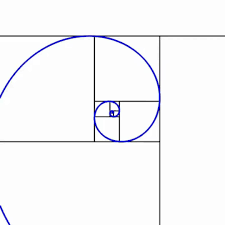
Quarters nest inside quarters. Each higher-timeframe quarter is divided into four lower-timeframe quarters, so the model scales seamlessly from macro context to intraday timing. The standard divisions (using New York / Eastern Time) are:

Yearly
Four quarters of three months — Q1 Jan–Mar, Q2 Apr–Jun, Q3 Jul–Sep, Q4 Oct–Dec.
Monthly
Four quarters, one per week of the month (week 1 → Q1, week 2 → Q2, and so on).
Weekly
Mon Q1, Tue Q2, Wed Q3, Thu Q4 — Friday is treated as a separate, lower-probability day.
Daily
Four six-hour sessions — 18:00–00:00 (Asia / Q1), 00:00–06:00 (London / Q2), 06:00–12:00 (NY AM / Q3), 12:00–18:00 (NY PM / Q4).
90-minute
Each six-hour session splits into four 90-minute cycles.
Micro
Each 90-minute cycle splits into four 22.5-minute micro-quarters for fine entry timing.

The trading "day" begins at 18:00 ET, not at midnight, which is why the Asian session is the day's first quarter. This alignment matters: it is what makes the daily AMD cycle line up with the global session rotation.

90-Minute Cycles

Intraday

Each six-hour session is divided into four 90-minute cycles, each carrying its own AMD sequence for intraday timing.

Zooming into a single session, the six-hour quarter is split into four 90-minute cycles, and each of those runs its own miniature AMD sequence. For the New York AM session (06:00–12:00 ET) the cycles fall at 06:00–07:30, 07:30–09:00, 09:00–10:30 and 10:30–12:00.

This is the layer most intraday traders live in. It lets you frame the session itself as accumulation, manipulation, distribution and continuation — so you can anticipate, for example, a manipulation leg early in the NY session before the real expansion later in it. Each 90-minute cycle subdivides once more into four 22.5-minute micro-quarters for precise entry timing.
02 — Time & Opens

True Opens & Sessions

The reference prices and time windows that turn the quarter model into actionable bias.

True Opens

Reference price

The open price taken at the start of a cycle's second quarter, used as the equilibrium that separates bullish from bearish bias.

A True Open is not the calendar open of a candle — it is the open of the second quarter of a cycle. The logic follows directly from AMD: the first quarter (accumulation) builds a deceptive range, so the genuinely useful reference is set where manipulation begins, at the start of Q2. Price trading above its True Open signals a bullish lean for that cycle; below it, bearish.

Because the model is fractal, every cycle has its own True Open:

True Day Open
00:00 ET (midnight) — the start of the daily cycle's second quarter (London).
Session opens
Each session's true open sits at the start of its second 90-minute block — 19:30 (Asia), 01:30 (London), 07:30 (NY AM), 13:30 (NY PM) ET.
True Week Open
The open of the week's second quarter. Conventions vary between Mon 18:00 ET and the Tuesday open — confirm which your charts use.
True Month Open
The open of the month's second weekly quarter — the second Monday of the month.
True Year Open
The open of the year's second quarter — the first Monday of April.

Used together, the True Opens stack into a bias map: a single glance tells you whether price is in premium or discount relative to the day, week, month and year at the same time. The True Opens indicator plots all of them automatically.

Note: every True Open follows the same rule — the open of the cycle's second quarter. All times are New York time (America/New_York) and shift with US daylight saving, so confirm the exact boundaries against your charts.

Sessions

Time window

The Asia, London, NY AM and NY PM sessions — the daily cycle's four quarters, each a natural container for an AMD sequence.

The four six-hour sessions are the daily cycle's quarters, and they map onto the global trading rotation: Asia (18:00–00:00 ET) as accumulation, London (00:00–06:00 ET) as manipulation, New York AM (06:00–12:00 ET) as distribution, and New York PM (12:00–18:00 ET) as continuation.

This is why London so often produces the "Judas swing" against the day's true direction, and why the cleanest expansion tends to arrive in the New York morning. Each session also carries its own True Open at the start of its second 90-minute block — 19:30, 01:30, 07:30 and 13:30 ET respectively. Reading the sessions as quarters lets you anticipate that rhythm instead of reacting to it.

03 — Smart Money Tools

SMT & Divergence

Cross-asset divergence techniques that expose where institutional order flow is really pointing.

SMT Divergence

ConfirmationSMT

When two correlated assets fail to make matching highs or lows, the divergence reveals smart-money intent ahead of the move.

SMT — Smart Money Technique (or Tool) — compares two normally correlated instruments, such as ES and NQ, or EUR/USD and GBP/USD. When they are in sync they make highs and lows together. When one makes a higher high while the other makes a lower high (or one sweeps a low the other holds), that divergence is a tell: liquidity is being taken on one side while the other refuses to follow.

SMT is most powerful at key levels and times — at a True Open, at the edge of a defining range, or at the turn of a quarter. There, a divergence confirms that a liquidity raid is exhausting and a reversal or expansion is likely. It is a confirmation tool: it tells you the manipulation is probably done.

Sequential SMT

ConfirmationSSMT

SMT divergence read across consecutive quarters or cycles, so each turn is confirmed in the context of the one before it.

Sequential SMT applies the divergence idea across successive quarters or cycles rather than at a single point. Instead of asking "do these two assets diverge right now?", it asks "how has their relationship shifted from the previous quarter's high/low to this one's?" — stacking divergences in sequence to track where order flow is building.

Reading SMT sequentially keeps it anchored to the AMD cycle: a divergence at the close of a manipulation quarter that is then confirmed at the start of distribution is far stronger than an isolated one. The Sequential SMT indicator automates this multi-cycle comparison so the divergences are flagged in the right time context.

PSP — Precision Swing Point

SignalPSP

A candle-level divergence where one correlated asset prints a swing point the other does not, marking a precise turn in order flow.

A Precision Swing Point is SMT taken down to the individual candle. When two correlated assets are compared and one closes a candle making a new swing high or low while the other does not confirm it, that single divergent candle is a PSP. It pinpoints, to the candle, where the two instruments disagree — a high-resolution signal that a turn is forming.

Because it is candle-precise, the PSP is prized for entry timing: it gives a defined point to act on and a clean level to risk against, rather than a broad zone. Stacked with quarter timing and a True Open, a PSP at the end of a manipulation leg is one of the cleaner confirmations the framework offers. The PSP indicator scans correlated pairs and marks these candles for you.

04 — Price & Structure

Liquidity & Structure

The ICT building blocks that describe where price is drawn to and how a range frames value.

Liquidity

Concept

The resting orders above highs and below lows that the market is drawn to take out — the fuel behind most moves.

Liquidity is simply where orders rest. Above old highs sits buy-side liquidity (buy stops from shorts and breakout buyers); below old lows sits sell-side liquidity (sell stops from longs and breakout sellers). These pools are obvious targets, so price is repeatedly drawn to them — a "draw on liquidity."

A sweep or raid is when price spikes through one of these pools to trigger the resting orders and then reverses. This is the engine of the manipulation quarter: Q2 frequently raids a liquidity pool to fill institutional orders before the real move begins. Knowing where liquidity sits tells you what price is hunting for next.

Defining Range

Structure

The high-to-low range that frames the current cycle, setting the boundaries for premium, discount and the liquidity on each side.

A defining range (or dealing range) is the high and low that bound the move you are currently trading — typically established during an accumulation quarter. Once set, that range becomes the reference everything else is measured against: its high holds buy-side liquidity, its low holds sell-side liquidity, and its midpoint is equilibrium.

The range is what makes premium and discount meaningful — without a defined high and low there is nothing to be "expensive" or "cheap" relative to. The Defining Range indicator marks the relevant range automatically so you always have the boundaries and equilibrium in view.

Premium & Discount

Concept

A range's upper half is premium (expensive), its lower half is discount (cheap), split at the 50% equilibrium.

Split any defining range at its midpoint and you get two zones. The upper half is premium — a relatively expensive area, favourable for selling. The lower half is discount — relatively cheap, favourable for buying. The dividing line, the 50% level, is equilibrium.

This gives objective context to a setup: a short taken from premium after a liquidity raid, aiming back toward discount, is aligned with how the framework expects price to deliver. Combined with True Opens — which are themselves equilibrium references — premium/discount keeps you trading from the favourable side of the range.

Fair Value Gap

StructureFVG

A three-candle imbalance that leaves an inefficiency price often returns to fill before continuing.

A Fair Value Gap is an imbalance left by a fast, one-sided move. Across three candles, when the first candle's wick and the third candle's wick do not overlap, the gap between them is an inefficiency — a price range that was delivered in only one direction. Markets tend to revisit these gaps to "rebalance" before continuing.

FVGs are most useful as entry zones: a return into an FVG in discount, in line with the cycle's bias, offers a defined place to engage. They pair naturally with the AMD model — the distribution quarter often creates the FVGs that the continuation quarter later fills.

Order Block

StructureOB

The last opposing candle before a strong displacement — a zone of institutional orders price often respects on return.

An order block is the last down-candle before a strong up-move (a bullish OB), or the last up-candle before a strong down-move (a bearish OB). It marks where institutions are presumed to have placed the orders that powered the displacement, so when price returns to that candle's zone it often reacts.

Order blocks give the AMD cycle concrete levels to work from: a bullish order block sitting in discount, formed at the end of a manipulation quarter, is a textbook place to look for the distribution leg to begin. They are a structural complement to the time-based quarter model.

05 — Context

Context & Timing

External factors that shape how — and whether — a cycle delivers.

High-Impact News

Context

Scheduled high-impact news is a known catalyst that frequently drives the manipulation and distribution legs of a cycle.

Quarterly Theory traders watch the economic calendar closely because scheduled, high-impact "red-folder" news — CPI, FOMC, NFP and the like — is a known time when volatility and liquidity raids are engineered. News rarely fights the cycle; more often it is the catalyst that delivers the move the quarter structure already implied.

A news release landing inside a manipulation quarter is a classic setup: the spike raids liquidity, traps the obvious side, and then the cycle's true distribution follows. Knowing when news prints lets you anticipate which quarter is likely to be the violent one and avoid being caught on the wrong side of the spike. The News indicator marks these events directly on the chart.

TCISD — True Change in State of Delivery

SignalTCISD

A confirmed flip in the direction price is being delivered, signalled when a candle body closes through the open of the opposing leg.

TCISD builds on ICT's change in the state of delivery (CISD): the point at which price stops being delivered lower and starts being delivered higher, or vice versa. A bullish change prints when price closes above the opening price of the prior bearish leg; a bearish change prints when price closes below the open of the prior bullish leg. Only candle bodies count — wicks are ignored, and the candle must close to confirm.

Used alongside the quarter model, a change in the state of delivery at the turn of a quarter or at a True Open is strong confirmation that manipulation has ended and distribution has begun. The TCISD indicator marks these shifts so the change in delivery is visible the moment it confirms.

Heads up: this entry describes TCISD as it is used in the library. Pair it with live charts to see exactly which closes the indicator flags in your market.

Put these concepts on your charts

The QTIL indicators turn everything on this page into automatic plots — quarters, True Opens, SMT, PSP, liquidity and more. Stop counting by hand and start trading the cycle.